

Have you ever been deep into a Python project when everything suddenly stops for no clear reason? The xud3.g5-fo9z Python Error can feel confusing because it appears out of nowhere and gives very little context. Whether you are building a small script or a full application, seeing xud3.g5-fo9z Python issue on your screen can instantly break your workflow and cause frustration. This xud3.g5-fo9z Python issue often looks random but usually points to a setup issue.
Many developers search for how to fix xud3.g5-fo9z python because normal solutions do not always work. This issue can come from dependency conflicts, broken environment settings, or corrupted project files. In some cases, even a small interpreter mismatch can trigger the xud3.g5-fo9z Python Error, making it hard to identify the real cause quickly. The xud3.g5-fo9z Python issue often repeats until the environment is fixed properly.
This guide explains the xud3.g5-fo9z Python issue in simple terms and shows practical ways to solve it step by step. You will also learn about about xud3.g5-fo9z python works so you understand what happens behind the scenes. By the end, you will know how to fix and prevent the xud3.g5-fo9z Python Error so your projects run smoothly without unexpected interruptions.
Understanding the xud3.g5-fo9z Python Issue
The Understanding the xud3.g5-fo9z Python Issue section helps you figure out what is actually going wrong inside your Python setup. At first, this error may look random or confusing, but it usually points to a deeper problem in your runtime environment. It often appears when Python cannot properly process or execute a script.
It can also happen when dependencies fail to load or when cached files interfere with your script. Even minor problems like outdated packages or incorrect environment activation can cause it. Once you understand these causes, fixing the problem becomes much more straightforward.
Common Symptoms You Might Notice
The Common Symptoms You Might Notice section helps you quickly spot when the xud3.g5-fo9z Python Error is affecting your system. These signs usually appear during script execution or while setting up your environment.
- Your Python script suddenly stops running without warning
- Terminal shows unclear or random-looking error messages
- The program works in CLI but fails in your code editor
- Import statements fail even when packages are installed
- Execution becomes slow or freezes unexpectedly
- IDE shows interpreter or environment mismatch alerts
- Files run once but crash on repeated execution
Main Causes Behind the Error
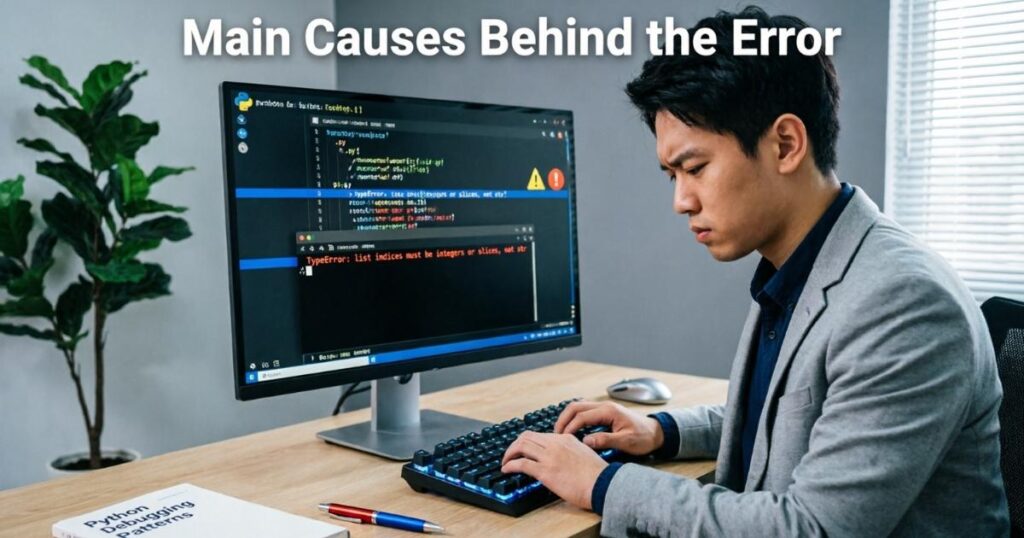
Ever had your Python project suddenly break for no clear reason, even though everything looked fine just a moment ago? That’s exactly how the xud3.g5-fo9z Python Error behaves. It doesn’t always point to one simple mistake. Instead, it usually comes from small hidden issues building up inside your setup.
Let’s break down the main reasons this happens in a simple, human way so you can actually understand what’s going on behind the scenes.
Corrupted Environment Files
Sometimes your Python environment gets messy over time. Think of it like a cluttered workspace where important tools go missing. When environment files get damaged, Python struggles to run scripts properly. This often leads to unexpected failures even if your code is correct.
Damaged Cached Data
Python stores temporary files in folders like __pycache__ to speed things up. But when these files become outdated or broken, they can cause confusion. It’s like your system trying to use old instructions that no longer match your current code.
Read More: PushWiki com: Complete Guide, Features, Benefits, and Review in 2026
Invalid Imports
Have you ever tried importing a module that doesn’t exist or is slightly misspelled? Python immediately gets stuck. Even a small mistake in naming or structure can trigger the xud3.g5-fo9z Python , especially in larger projects.
Dependency Conflicts
This happens when different packages don’t get along. One library might require an older version while another needs a newer one. It’s like two apps fighting over the same system resource, and your program pays the price.
Encoding Problems
Sometimes the issue is not even code-related. Hidden characters, wrong file encoding, or copy-pasted text from websites can silently break your script. These errors are tricky because everything looks normal on the surface, but Python reads it differently.
How to Fix xud3.g5-fo9z Python Problems

Ever had your Python project working perfectly, then suddenly it just breaks for no clear reason? That’s usually when the xud3.g5-fo9z Python Error shows up. It feels random at first, but it’s often your environment quietly falling out of sync.
The good part is this: you don’t need advanced skills to fix it. You just need to follow a few simple checks, like cleaning your workspace step by step until everything starts behaving normally again.
1. Restart the Environment
A restart is often underrated but powerful. Your IDE or terminal may hold stuck sessions in memory that interfere with execution. Restarting clears the Python runtime environment and resets everything.
For example, if your script was running fine yesterday but fails today, a simple restart can refresh the interpreter path and fix hidden session conflicts that trigger the xud3.g5-fo9z Python Error.
2. Clear Cached Files
Python stores temporary compiled files inside __pycache__. These help speed things up, but they can also cause trouble.
When your code changes but cached bytecode doesn’t update properly, Python may run outdated logic. Deleting these folders forces Python to rebuild fresh files and removes hidden conflicts that often lead to execution issues.
3. Verify File Names and Imports
This is a classic mistake even experienced developers make. A small typo in a filename or import statement can break your whole program.
For example:
- importing request instead of requests
- mismatched folder names
- incorrect relative imports in packages
These small errors often appear as part of the Fix Python Environment Errors category and can easily trigger unexpected failures.
4. Reinstall Dependencies
Broken packages are one of the most common hidden causes. Sometimes installations fail halfway, or versions clash with each other.
Reinstalling dependencies using a clean command like:
- pip install –force-reinstall
helps remove corrupted files and fixes mismatched versions. This is especially useful when you face a Python Virtual Environment Mismatch or unstable package behavior.
5. Check for Encoding Issues
Not all errors come from logic. Some come from invisible characters in your files.
If you copy code from websites or PDFs, hidden Unicode symbols can sneak in. These characters confuse Python and cause silent crashes. Saving your file in UTF-8 format or rewriting suspicious lines often solves the issue.
6. Test in a Clean Environment
If everything still fails, create a fresh virtual environment. This removes all old packages, settings, and conflicts.
It’s like moving your project into a brand-new room with no clutter. If your script works there, you know the issue is inside your original setup, not your code itself.
How to Read the Error Traceback Effectively
Understanding a Python traceback is an important part of Debugging Python for Beginners and fixing issues like the xud3.g5-fo9z Python Error. It helps you see exactly where your code failed and why the program stopped instead of guessing blindly. This makes troubleshooting faster and more accurate.
A traceback is like a detailed report from Python that shows what happened during execution. It explains the flow of your program step by step and highlights the exact point where the error occurred. This is especially useful when dealing with runtime issues, missing modules, or environment problems that are not obvious at first glance.
The last line of the traceback is usually the most important because it shows the final error message and type, such as
SyntaxError or ModuleNotFoundError
File paths and line numbers help you quickly locate the exact place where the issue exists in your code. The stack trace shows how the program moved through different steps before reaching the error, which helps you understand the full context of the failure.
At first, a traceback may look complex and overwhelming, especially in large projects. However, once you learn to break it into small parts, it becomes much easier to understand. With practice, reading tracebacks helps you fix problems like the xud3.g5-fo9z Python in a more structured and confident way.
Comparison of Common Fix Strategies
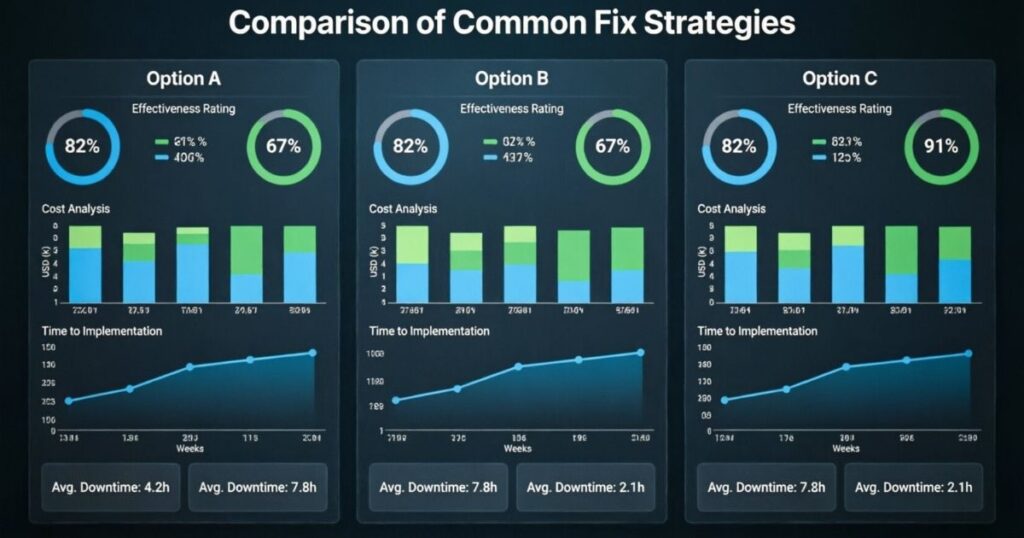
Understanding different ways to resolve the xud3.g5-fo9z Python issue helps you choose the right solution depending on what is actually causing the issue. In Fix Python Environment Errors, no single method works for everything, so comparing approaches gives you better clarity and faster debugging.
This topic is important because Python errors can come from runtime issues, dependency problems, or even hidden configuration mismatches. Some fixes are quick and temporary, while others are more stable and long-term depending on your project setup.
The interpretation may vary depending on the situation:
| Fix Strategy | Best For | Advantage | Limitation |
| Restart Environment | Temporary runtime glitches | Fast and simple solution | Doesn’t fix deeper configuration issues |
| Clear Cache Files | Outdated bytecode or __pycache__ issues | Refreshes execution state | First run may be slightly slower afterward |
| Reinstall Dependencies | Broken or missing packages | Restores package stability | Can cause version conflicts if not managed properly |
| Clean Virtual Environment | Major setup or conflict issues | Most stable long-term fix | Requires time to rebuild environment |
| Check Encoding Issues | Hidden or invisible file errors | Fixes subtle script corruption | Hard to detect without inspection |
Each method has its own strength and weakness. Quick fixes like restarting or clearing cache work well for minor glitches, but deeper problems like dependency conflicts or interpreter mismatches need stronger solutions such as reinstalling packages or using a clean virtual environment. For persistent cases of the xud3.g5-fo9z Python Error, combining multiple strategies usually gives the most reliable result.
Read More: PushWiki com: Complete Guide, Features, Benefits, and Review in 2026
Real-World Application Case Study
In real development environments, errors like the xud3.g5-fo9z Python Error don’t just appear in theory—they show up during actual project work. Developers often face this issue while running scripts in production setups, building APIs, or testing automation tools. It usually points to deeper environment or configuration problems rather than a single coding mistake.
For example, imagine a developer working on a data processing tool in Python. The script runs perfectly on their laptop, but fails when moved to a server. The issue turns out to be a Python Virtual Environment Mismatch where the server is using a different interpreter path and missing dependencies. Even though the code is correct, the environment difference triggers the error.
In another case, a team using VS Code notices that their project runs in the terminal but crashes inside the IDE. After investigation, they find outdated __pycache__ files and conflicting package versions installed through pip. Once they clear the cache and reinstall dependencies using
pip install –force-reinstall,
the project starts working normally again. This shows how small setup issues can create confusing runtime failures.
These real-world examples highlight an important lesson: most Python errors are not random. They are usually caused by environment conflicts, cached data issues, or dependency problems. Once developers understand this pattern, debugging becomes much faster and more predictable, especially when dealing with complex errors like the xud3.g5-fo9z Python issue.
Advanced Debugging Techniques
When simple fixes fail, the xud3.g5-fo9z Python issue usually points to deeper issues inside your Python setup. At this stage, basic restarts or reinstalling packages are not enough. You need structured Advanced Debugging Techniques to uncover hidden environment, dependency, or interpreter problems that are not visible at first glance.
These techniques are important because modern Python projects often involve multiple layers like virtual environments, IDE configurations, and external libraries. Even a small mismatch in any of these layers can lead to confusing runtime failures or import errors.
A useful starting point is checking for hidden dependency conflicts. Run the following command to detect issues that pip does not always warn you about:
pip check
This helps reveal broken or incompatible packages that may trigger script execution failure or unstable runtime behavior.
Next, inspect installed package details to confirm everything is correctly set up:
pip show package-name
This is especially helpful when diagnosing Reinstall Python Dependencies Pip issues or when you suspect a package is partially installed or corrupted.
Another critical step is verifying whether your IDE and terminal are using the same Python interpreter. Many developers face a Python Virtual Environment Mismatch where VS Code, PyCharm, or the terminal all point to different environments. You can check this using:
which python
python –version
If the versions or paths differ, align them with your IDE settings. This alone resolves many hidden import and execution errors.
It’s also important to review environment variables, because they can silently break your setup. Incorrect PYTHONPATH or PYTHONHOME values may force Python to search in the wrong directories, leading to unpredictable errors like the xud3.g5-fo9z Python Error.
printenv | grep PYTHON
Finally, if you are working with test frameworks like pytest, ensure your project structure is correct. Missing __init__.py files or incorrect module layouts can break import paths and expose errors that do not appear during normal execution. These small structural issues often become visible only during test runs or CI pipelines.
Overall, advanced debugging is about checking the environment layer by layer. Once you align your interpreter, dependencies, and configuration properly, most complex Python errors become much easier to resolve.
Why Random-Looking Errors Are Increasing
The Why Random-Looking Errors Are Increasing section explains why modern Python projects often show confusing issues like the xud3.g5-fo9z Python Error. These errors usually come from complex environments, not random code failure.
- Modern Python projects use many external libraries, which increases chances of version conflicts and unexpected crashes during execution
- Developers often switch between multiple environments like VS Code, PyCharm, and terminal, causing interpreter mismatch issues
- Copy-pasting code from online sources can introduce hidden characters that silently break scripts
- Frequent updates in packages may create compatibility issues between old and new dependencies
- Virtual environments are sometimes not activated correctly, leading to missing or wrong package imports
- Large projects often have messy folder structures, making imports harder to resolve correctly
- Background tools like linters and test runners can expose hidden issues that do not appear in simple script runs
Preventing Similar Problems in the Future
Most Python errors don’t appear out of nowhere—they slowly build up from small habits in your project setup. The xud3.g5-fo9z Python Error is one of those issues that often returns if the environment stays messy. The good news is that a few simple habits can save you from repeating the same frustration again and again.
Think of it like maintaining a car. If you take care of small things regularly, you avoid big breakdowns later.
Keep Dependencies Organized
A clean dependency list is like a well-arranged toolbox. When packages are scattered or outdated, conflicts start showing up during runtime. Using a requirements file and updating packages regularly helps avoid hidden clashes that lead to the xud3.g5-fo9z Python Error.
For example, instead of installing random versions, lock your project dependencies so everything stays stable and predictable.
Use Consistent Naming
Simple naming mistakes can silently break your code. Mixing file names like utils.py, Utils.py, or utility.py confuses imports, especially in larger projects.
Keeping names consistent across your project helps Python resolve modules correctly and prevents avoidable import issues that often feel like random errors.
Backup Working Configurations
Imagine spending hours fixing your environment, only to break it again later. That’s where backups help.
Saving a working virtual environment setup or a clean requirements snapshot allows you to restore your project quickly. It’s a safety net that protects you from repeated Fix Python Environment Errors situations.
Avoid Forced Shutdowns
Stopping a running script abruptly may leave temporary files half-written. These incomplete states can corrupt your environment over time.
Always stop processes properly using the terminal or IDE controls. It keeps your runtime clean and reduces the chances of future execution failures.
Regularly Clean Temporary Files
Folders like __pycache__ and other temp directories quietly accumulate over time. While they help performance, outdated cache can confuse Python during execution.
Cleaning them occasionally ensures your project always runs fresh code instead of old compiled versions. It’s a small habit that prevents many hidden issues, including environment mismatches.
When the Problem Might Be Security Related
In most cases, the xud3.g5-fo9z Python Error is a technical issue linked to Python environment configuration, not a security threat. However, in rare situations, it can be worth checking whether the same identifier appears outside your code, especially in system-level processes or unknown files. This helps separate normal debugging issues from potential security risks.
A brief background is important here. Python errors usually come from runtime issues, dependency conflicts, or interpreter mismatches. But if a suspicious file or process shares the same name and appears outside your project folder, it may require extra attention to rule out unwanted software or hidden scripts.
The interpretation may vary depending on the situation:
- If the identifier appears only in a Python traceback, it is almost always a harmless development error related to script execution failure or environment issues
- If it shows up in system startup entries or background processes, it may indicate an unknown executable that needs further inspection
- Missing digital signatures or unsigned executables may point to untrusted files that are not part of standard Python installation or dependencies
- Security scans using tools like Microsoft Defender or Malwarebytes can help confirm whether the system is clean or affected
In both positive and negative scenarios, the key is verification. Most developers find that the system is safe and the issue is purely related to Fix Python Environment Errors. Once security concerns are ruled out, they can confidently return to normal debugging and focus on resolving the actual Python configuration problem.
Frequently Asked Questions
What exactly is xud3.g5-fo9z in Python?
The xud3.g5-fo9z Python Error is usually a runtime or environment issue, not a real Python feature.
It often happens due to setup, dependency, or interpreter problems.
Does clearing pycache fix the xud3.g5-fo9z Python error?
Clearing pycache can fix the xud3.g5-fo9z Python Error if old cached files are causing conflicts.
But it won’t help if the issue is from dependencies or environment mismatch.
Can this error indicate a virus or malware?
In most cases, the xud3.g5-fo9z Python Error is not related to viruses or malware.
It is usually a harmless coding or configuration issue in Python.
How do I prevent this error from recurring?
Use clean virtual environments and manage dependencies properly to avoid the xud3.g5-fo9z Python Error.
Keeping your setup organized reduces chances of repeated issues.
Does this error affect only Windows or all platforms?
The xud3.g5-fo9z Python Error can appear on Windows, Linux, and macOS systems.
It depends on Python setup, not the operating system.
What is the fastest single fix to try first?
Restarting your environment is the quickest way to fix the xud3.g5-fo9z Python Error.
It clears temporary glitches and resets the Python runtime.
Should I reinstall Python entirely?
Reinstalling Python is only needed if nothing else fixes the xud3.g5-fo9z Python Error.
Most cases are solved by fixing dependencies or environment settings.
Conclusion
The xud3.g5-fo9z Python Error is usually a sign of environment or setup issues in Python, not a serious code failure. Most of the time, the xud3.g5-fo9z Python appears because of dependency conflicts, interpreter mismatch, or cached file problems. Understanding the xud3.g5-fo9z Python helps you stay calm and avoid random guessing during debugging. It is always better to focus on structure and setup when facing the xud3.g5-fo9z Python instead of changing your whole code.
To fix it, you should first learn how to fix xud3.g5-fo9z python step by step and check your environment carefully. It also helps to understand about xud3.g5-fo9z python works so you know what is happening behind the scenes. In most cases, cleaning your setup, reinstalling dependencies, and resetting the environment can solve the xud3.g5-fo9z Python Error quickly. The xud3.g5-fo9z Python is common, but it becomes easy once you follow the right troubleshooting process for xud3.g5-fo9z.